
Letters on Spiritual Formation #6
Belief Will Drive Your Actions - Part 2
This is article is part of a series of letters on spiritual growth and maturity. To read the previous letter in the series, click here.

It was the belief that Adam and Eve would not die, but would become like God that caused them to sin
Sin was not the result of temptation, it was the result of their belief structure coming into agreement with deception. There are core beliefs that you hold about yourself and about others that drive your behaviour. These core beliefs drive destructive behaviour to yourself and to others, as well as actions that build up others and yourself. Until these change we will be stuck in perpetual cycles of behaviour driven by mistaken identity.
In Matthew 25, Jesus tells the story of three men that were each given finances to invest by their master. To one was given five talents, to another two talents, and to another one talent. The two men given five and two talents invest what they have been given and show a return on their investment. Their master comes back to them and says to these two men:
"His lord said unto him, Well done, you good and faithful servant: you have been faithful over a few things, I will make you ruler over many things: enter into the joy of your lord." Matthew 25:21, 23
The man who was given one talent then says this to his master:
"Then he who had received the one talent came and said, Lord, I knew you that you are a hard man, reaping where you have not sown, and gathering where you have not spread: And I was afraid, and went and hid your talent in the earth: lo, there you have what is yours." Matthew 25:24-25
What determined the actions of the servants?
What caused the first two servants to invest wisely and the third servant not at all?
The answer is simple: it was what they believed about the master.
Their beliefs drove their actions. The first two servants recognized that the master was a rewarder and responded accordingly. The third servant viewed the master of as a hard and unfair man. The belief in who the master was drove the actions of each servant.
Within the life of Jesus there is an example of beliefs driving righteous actions. Satan began testing Jesus by calling into question who Jesus believed himself to be, “If you are the Son of God…” The first two temptations of Jesus begin with this phrase. Satan preyed on the core belief of Jesus. “If you are…” calls into question personal identity. The third temptation (fall down and worship me) calls into question who Jesus believed God to be.
These two core beliefs (who is God and who are we) drive our actions and Satan continues to try to exploit them. Jesus combated the use of deception by quoting truth. But not just any truth, Jesus specifically states, “Man shall not live by bread alone, but by every word that proceeds from the mouth of God.” Jesus had just experienced the life-giving words of God proceeding from the father’s mouth at his baptism 40 days earlier.
If sin (a life of decay) came in the form of deception, it follows that freedom would come in the form of truth:
“And you shall know the truth, and the truth shall make you free.” John 8:32
This is where we come back to Jesus, light, and life found in John 1:4. As you grow closer to Jesus, light shines upon you to reveal his thoughts about you. This is your original and true design. This light brings truth. Where characteristics were once shrouded in darkness and decay, being comfortable and familiar with pain and trauma, light now exposes the true, original intent God had for you. This experience with truth has the potential to bring incredible transformation and radically impact the nature of the life within us. True identity only comes in communion with he who is light, Jesus.

So, why does God leave difficult people in your life? What purpose could he have in leaving people that seem to be spiritual irritants to you?
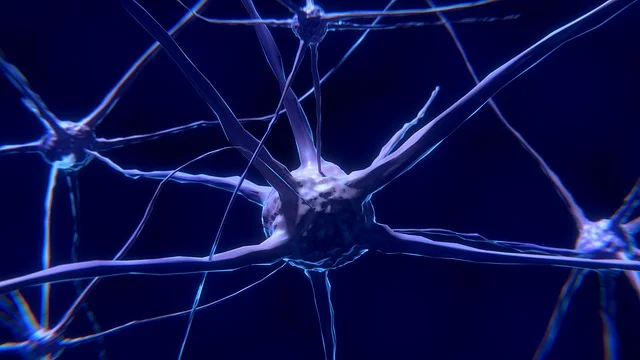
David said regarding God, “Your thoughts towards me are as numerous as the sands on the seashore.” Every one of those thoughts has the ability to rewire your brain.

Laying the axe to the root of the tree means our patterns and habits of response dictated by the formation of our brain must change.

My wife and I were great friends before we started dating. We spent a year developing a deep friendship before we became romantically involved. It took all of a week for the openness we had cultivated as friends to be challenged by pre-conditioned responses ingrained from past pain.

Imagine that your brain is like a forest. There is a vast interconnectedness of leaves, branches, and underbrush. You decide one day to carve a path through this forest.


The revelation of his care in the midst of my inability to walk in the way of holiness completely undid me. As I was in this gathering, teaching these students, the revelation of that care hit me.

Dark nights of spiritual struggle are not normal seasons of the spiritual life. There will be seasons of great joy, increasing fruit, successful initiatives, incredible intimacy, watching others frolic and play with God, sweetness before the Lord, and many other incredible moments to celebrate in the grand scheme of life in God.

...the dark night begins to effectively erode pride from your life, and you become more fully aware of your brokenness then you have ever been.

The ongoing cycle of spiritual growth will include periods of dryness, emptiness, and perceived distance from God. They are all designed for your benefit.

Our temporary pain betrays the eternal love of God. He is more concerned about your eternal destiny than he is in your temporal comfort.

When I would ask my father questions about the bible or theology, he would never give me a straight answer. He would maybe give a couple of thoughts, point out a verse or two, and then leave it at that...

Sometimes our pain tells us the degree of separation between our God-breathed destiny and the reality of our actual day to day life.

As those who are united with God are joined together with his Spirit, there is a beautiful harmony in the way life is shared in this metaphor. The vine exists to nourish, feed, and grow the branches, the branches exist to bear the fruit of the vine.

Developing disciplines in your life makes room on a consistent basis for God to speak to you, and for you to respond to his presence.

We fail to realize that the question, “What should I do?” is often unanswerable for this simple reason: if God were to answer it directly we would either run from the answer because of the immensity of the task or fall into pride over the great plan he has for us.

As man is united to God physically, his actions begin to change. There is an observable difference in who he was and who he is becoming.

Man and woman, who are of the same flesh, cleave to one another. God who is Spirit creates man with a spirit, and calls man to also cleave to himself.

You are made in the image of the God who is light. You are to grow in this light, and as you grow you will partake in the very nature of God. This is a mystery.

When your framework, or your total expression, is integrated with the truth of who God created you to be, peace reigns. This is the united heart.

Truth is that which straightens what is twisted. It makes our ways straight. The light within you will either twist or straighten. It will lead to righteousness or licentiousness. It will hurt or heal you.

Proverbs provides us with the clue to understand the function of our spirit: "The spirit of man is the lamp of the LORD, searching all the inner depths of the heart."

As you grow closer to Jesus, light shines upon you to reveal his thoughts about you. This is your original and true design. This light brings truth.

It was the twisting of the perception that Adam and Eve had regarding themselves and regarding God that caused them to fall. This twisting changed their belief structure.

There exist beliefs that we hold at the core of our being, regardless of how true they are. These beliefs are shaped by our triumphs, failures, courageous moments, fears, successes, hurts, and many others moments in life.
There are numerous examples in scripture where, in a moment, God defines an individual. For Moses he said, "I have known you by name and you have found favor in my sight" and "the man Moses was the most humble man on the face of the earth." For David he whispered, "You are my friend," and "Seek my face."

For weeks I couldn’t stop thinking about these dreams. I shared them with friends, I mulled over them, and I prayed about them. My spirit was troubled.

How do we grow in Christlikeness when we are still stuck in pain and trauma? The first step in embracing the character of Christ is embracing the healing of Christ.
The underlying principle behind God leaving difficult people in your life is this: If a difficult person in your life needed a touch from God, God would never be able to send them to you.